Repeat the Gaze

1 Comment

Repeat the Gaze

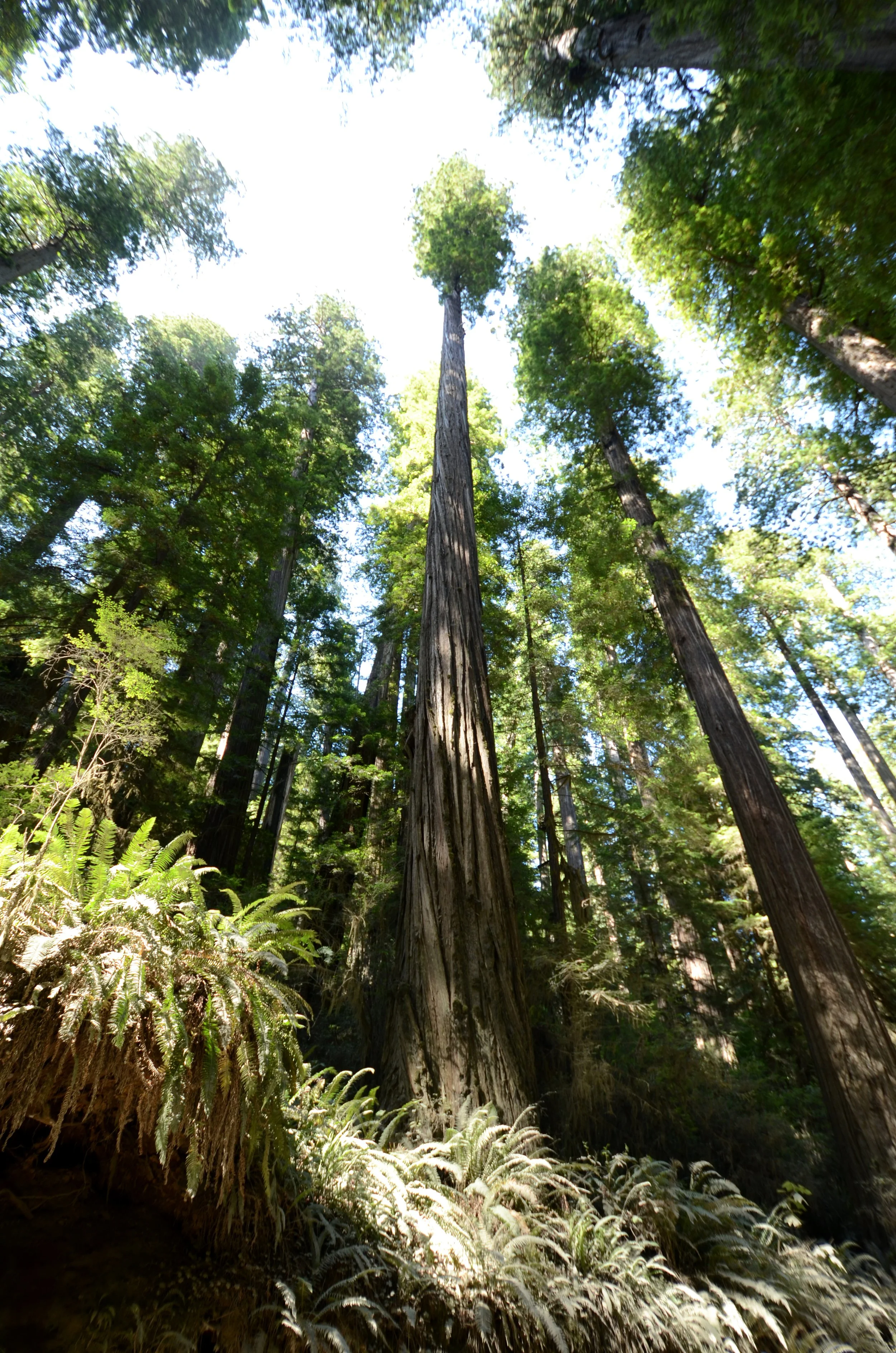
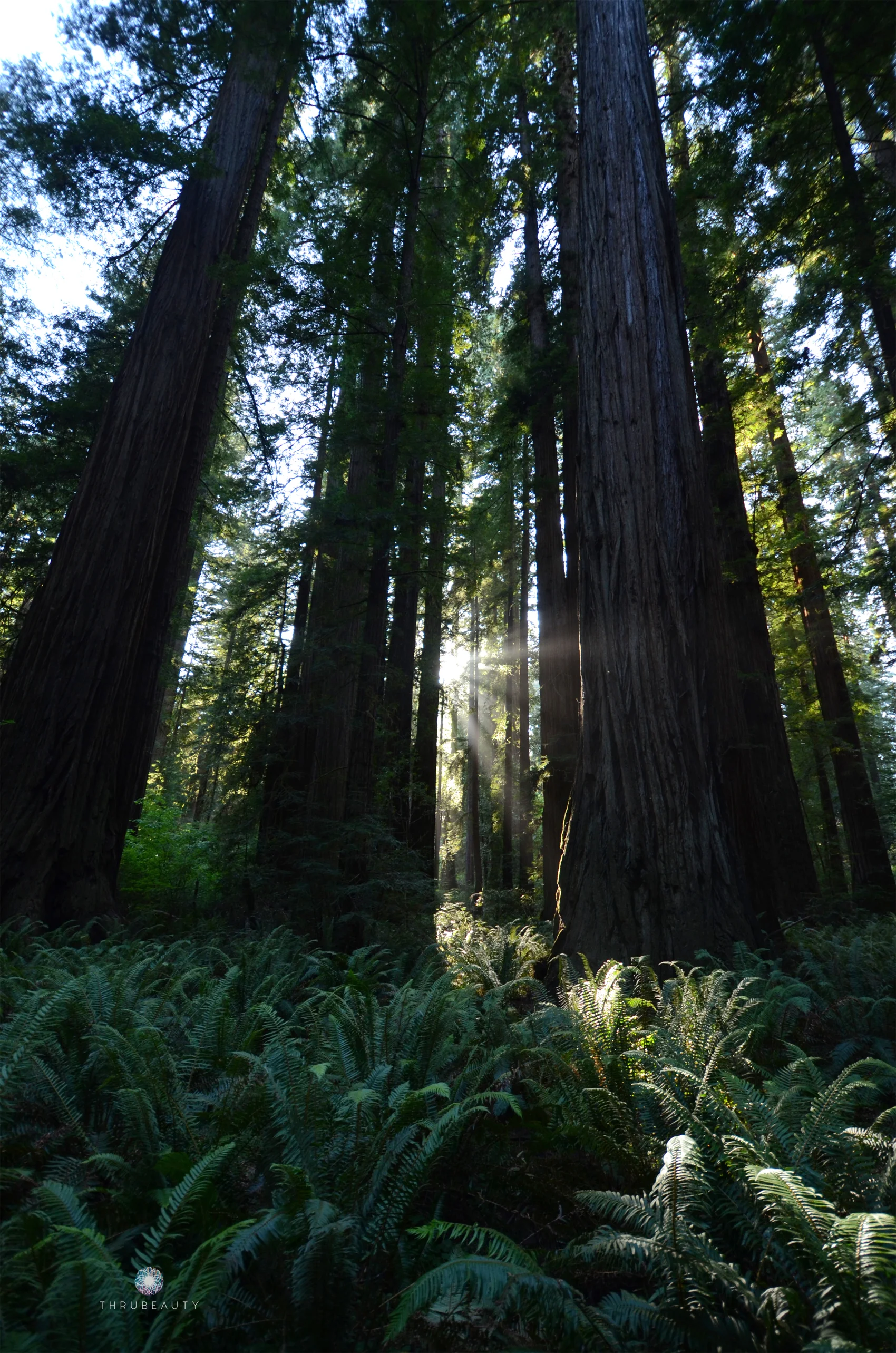
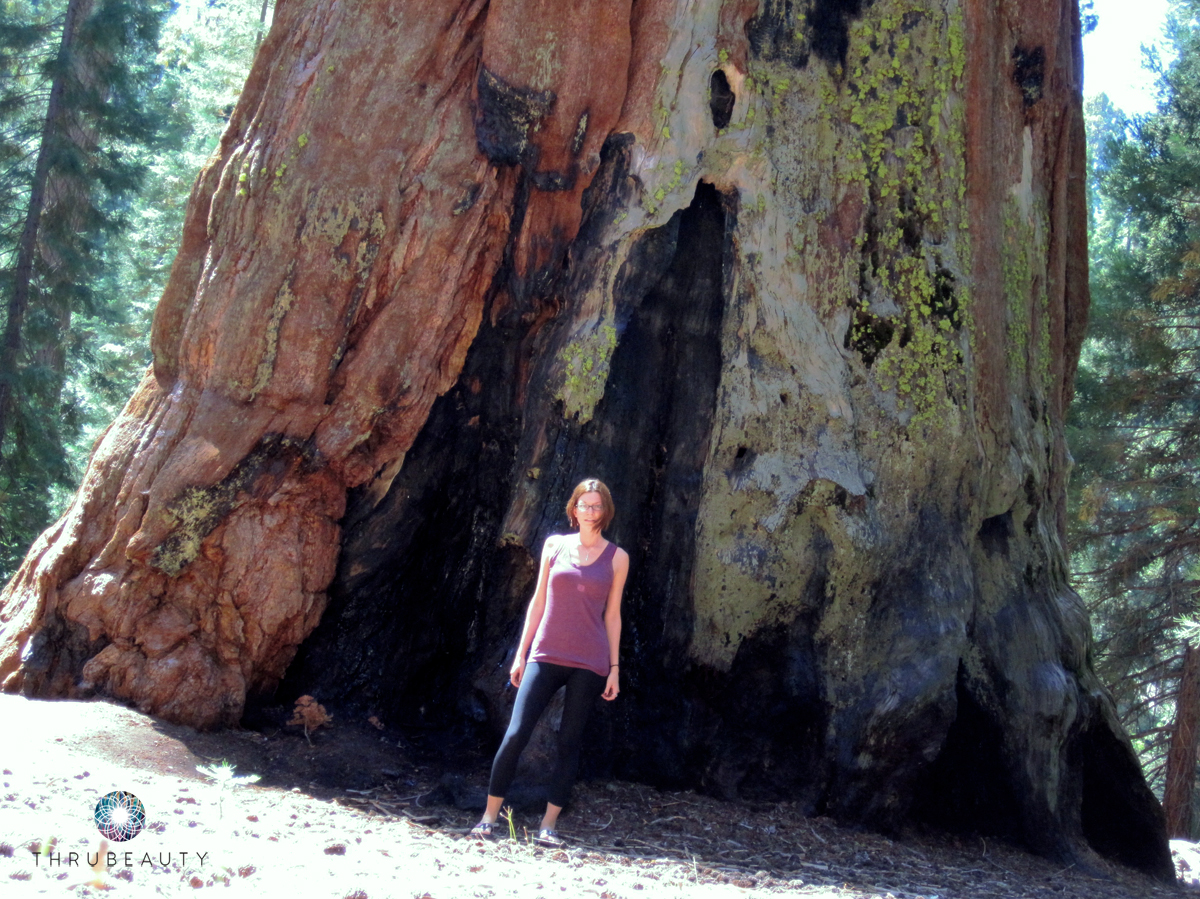
Days after my last post, I am still reflecting on Sequoias, the same ancient ones I wrote of before. The very first time I visited these giants, I stood in awe of their vastness. I walked to the center of a grove off the beaten path, and there, surrounded by them, I turned toward one—and was met with a wound.

At the foot of the tree, the trunk opened into a blackened hollow, a cave of char I could nearly have stepped inside. Fire had been here. Above the hollow the bark rose in a long dark scar that reached, like a shadow, toward the light of the canopy. For a moment that was all I could see: this patient, towering being, burned. My first thought was the one we are each trained to think when we come upon a mark like this: something went wrong here.

I have been thinking about that wound, and my initial thought, a great deal lately. If I am honest, it is because I am standing in a fire of my own. There are parts of my life that feel like more than I know how to hold, and I keep returning, in my mind, to that scarred and living tree, as though it might teach me how to stand in what I cannot yet fathom, and perhaps even how to be remade by it.

So let me tell you what the Sequoia has been teaching me.

The giant Sequoia does not merely survive fire. It depends on it. Its bark, fibrous and nearly two feet thick, is made to char and hold, insulating the living tree within. Its cones can stay closed for years, waiting, until the heat of a passing fire dries them open and releases their seeds. That same fire clears the crowded floor of the forest, lays the bare soil open to the light, and returns its own ash as nourishment, so that what falls might root and rise. The scar I was grieving and the seedlings I could not yet see had come, somewhere, from the same flame. The wound and the gift had arrived together.

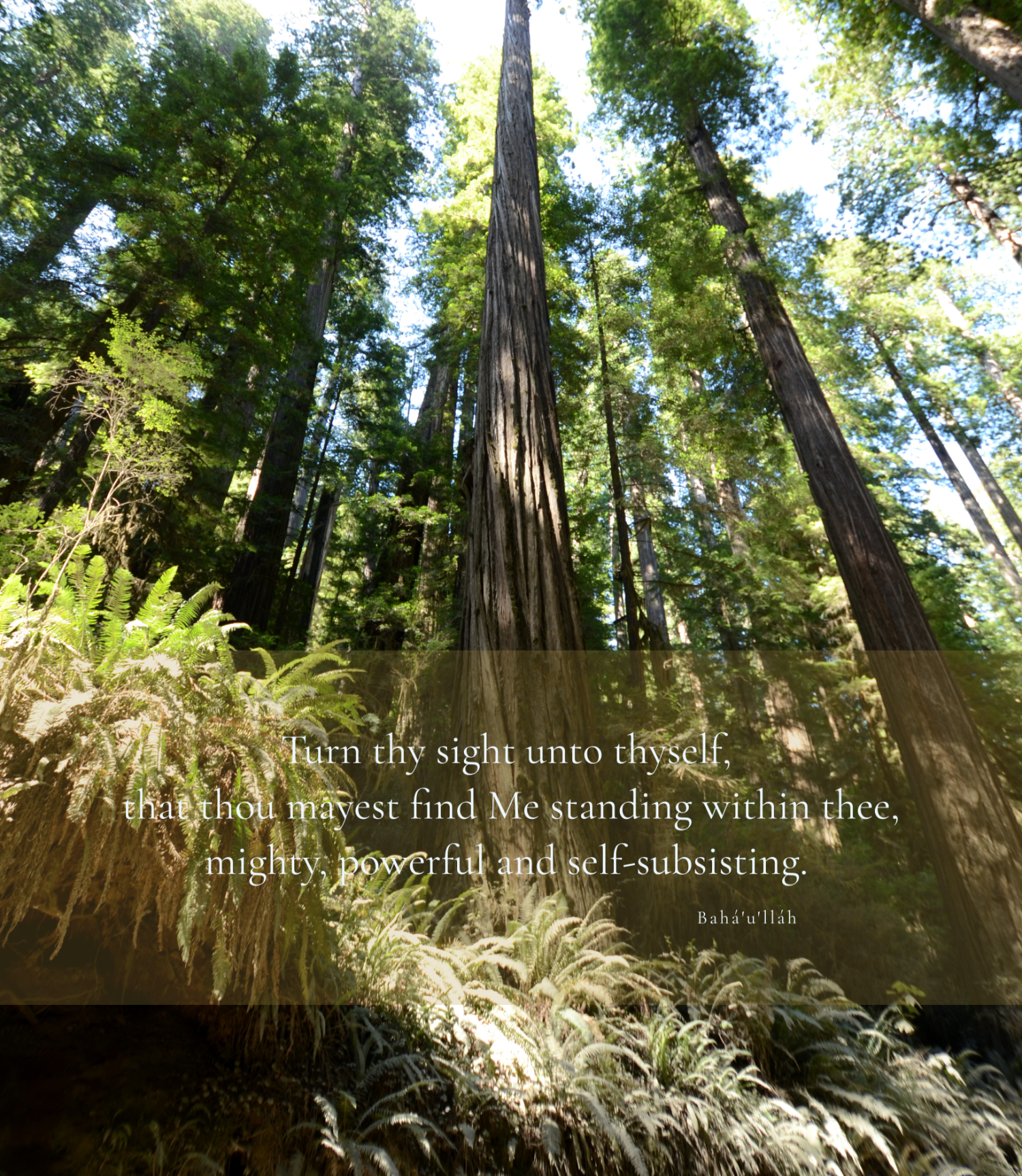
I stood there a long while that day, and now, as I reflect on it, the words of Bahá'u'lláh come to mind:

Gazing with the eye of absolute insight, the wayfarer... seeth in God's creation neither contradiction nor incongruity, and at every moment exclaimeth, "No defect canst thou see in the creation of the God of mercy. Repeat the gaze: Seest thou a single flaw?" He beholdeth justice in injustice, and in justice, grace.

In the past I’ve frequently wondered about that final line: He beholdeth justice in injustice, and in justice, grace. However, in this moment I’m also struck by Bahá'u'lláh’s invitation to look again. Repeat the gaze. My cursory glance had shown me only the burn. The second, all these years later, has shown me the forest the burn made possible. Neither view was untrue. But only the second was whole. And only the second was beautiful.

This, I am slowly coming to believe, is what justice most deeply is—not a verdict, but a way of seeing.

Much like my last post explored, we are used to imagining justice as a scale: a mechanism for weighing the wrongs committed by one against what is then owed to another—retribution at its finest, vengeance at its worst. This presupposes the trials and tribulations of our lives are the result of another’s actions. And in the ordering of our shared life that scale does have its place (more on this in a later post). But this is not where Bahá'u'lláh begins. In the Hidden Words He offers justice not as a measure to be enforced upon us, but as a gift to be received:

The best beloved of all things in My sight is Justice... By its aid thou shalt see with thine own eyes and not through the eyes of others, and shalt know of thine own knowledge and not through the knowledge of thy neighbor.

Justice, here, is an eye. It is the capacity to see for oneself—clearly, honestly, without borrowing the secondhand sight of fear, or grievance, or the crowd. And the first thing such an eye must do is refuse to pretend. To behold justice in injustice is not to call the fire something gentler than fire. The scar is a real scar. The eye of justice does not soften the wound into something easier to look at; it looks straight at it, and names it, and only then keeps looking.

For the gift of that clear gaze is that it can penetrate further. Where the first look sees the offense, the repeated gaze begins to see the fullness of what, or who, caused it—not the deed alone, but the soul beneath the deed. 'Abdu'l-Bahá says it with a tenderness that disarms me every time:

Do not look at the shortcomings of anybody; see with the sight of forgiveness... The imperfect eye beholds imperfections. The eye that covers faults looks toward the Creator of souls.

This is why justice and forgiveness are never truly at war—it is not balance, but coherence we seek. They are the same eye at two depths. Justice sees the wound truly; forgiveness sees through it, to the one who is more than the wound. Forgiveness is not the surrender of clear sight—that would only be borrowing other eyes again, the very thing justice forbids. It is clear sight carried one step closer to compassion. In justice, grace.

I will not pretend this is easy. It is one thing to read a fire scar from the cool of a grown grove. It is another thing entirely to stand in the flame.

Most of the time, when we are wronged, or when life simply breaks against us, we are not the calm witness of some old, healed wound. We are inside the fire, and it burns. Bahá'u'lláh does not call our trials gentle:

My calamity is My providence, outwardly it is fire and vengeance, but inwardly it is light and mercy.

Outwardly fire. He says so plainly; the bitterness is named, not waved away. And yet, inwardly, mercy—the same flame that scars is the flame that opens the cone. Grief and sorrow, 'Abdu'l-Bahá tells us, do not come to us by chance, they are sent to us by the Divine Mercy for our own perfecting; the plant most pruned is the one that comes to bear the most abundant fruit. The medicine is bitter on the tongue. Its mercy is something most of us taste only later—when enough seasons have passed that we can repeat the gaze, and finally see what the fire was doing. I am not there yet with my own fire. Most days, I am simply still in it.

I hold one thing carefully here, because it is so easily misappropriated. This reading of the fire as mercy is a gift the soul learns to offer its own suffering. It is never a sentence to lay upon another's. To whisper this is my medicine to my own heart in the dark may be the beginning of healing; to say this is your medicine to someone in their grief may be experienced as a quiet cruelty. So I seek to turn the searching gaze first, and most gently, upon my own trials—and toward another's pain I strive to offer only tenderness.

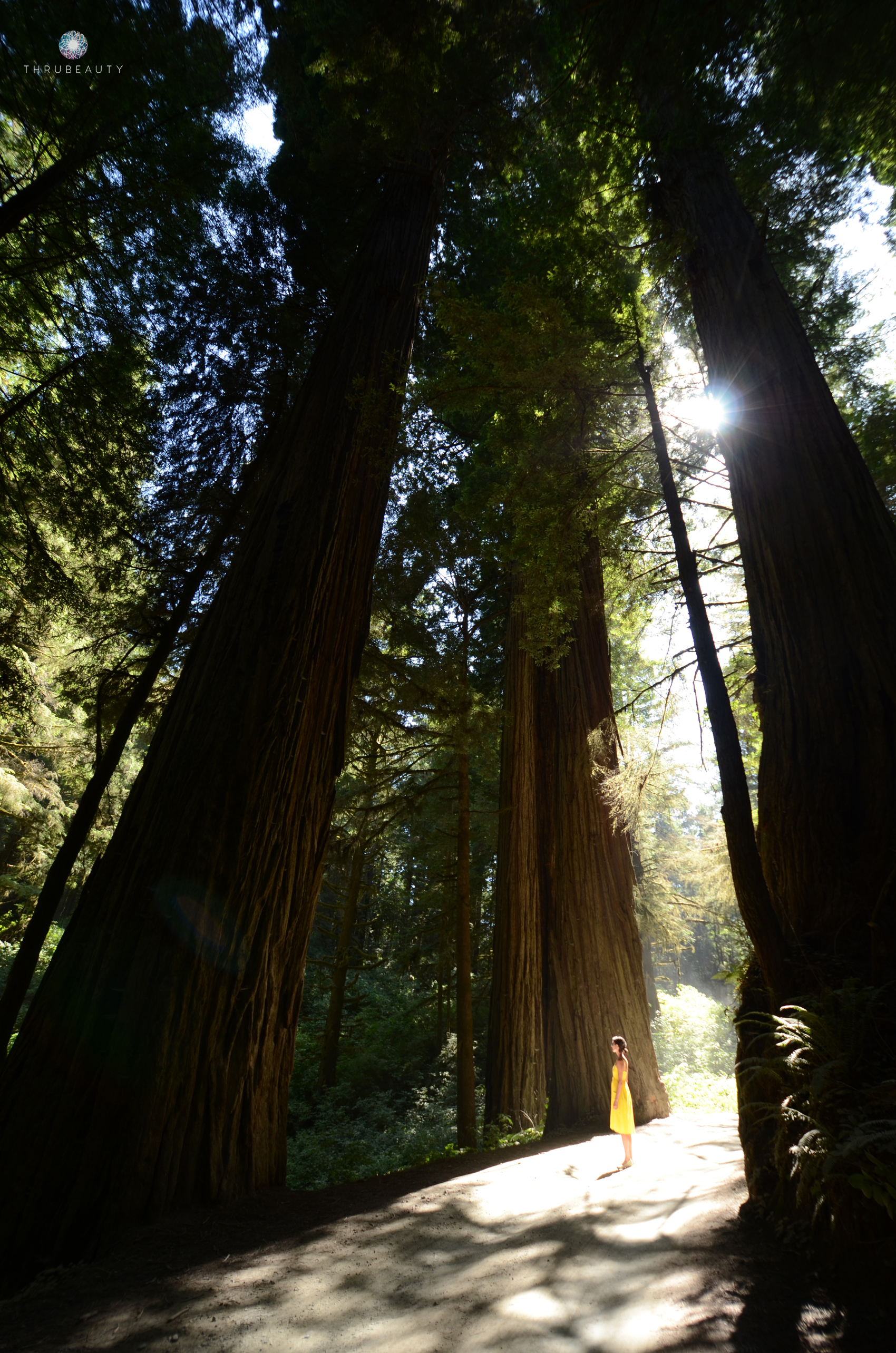
I remember walking back through the grove that day as the light slanted low, past elders that had each, across their long lives, been opened by fire more than once. Every one of them carried a scar. Every one of them was still standing—not in spite of the burning, but in some expansive way because of it.

What beauty, I wonder even now, might be waiting in my own scars, if I were only willing to look again?

And yet one life in particular points past even this. There is a sight, I am learning, that lies at the intersection of both seeing truly and seeing through. Marjory Morten reached for it when she wrote of someone who had lived it:

To be hurt and to forgive is saintly, but far beyond this is the power to comprehend and not be hurt... It is not that we make the best of things, but that we may find in everything, even in calamity itself, the germ of enduring wisdom.

The germ. The seed. The very thing the fire-opened cone lets fall. To comprehend, Morten says, is not to grit our teeth and make the best of a bad thing; it is to find, folded inside the calamity itself, a living seed of wisdom already waiting on the heat. This is, perhaps, the practical expression of repeated gaze: not only to forgive the fire, but to comprehend it so wholly that it finds in us less and less it can wound.

Morten was not writing of an idea; she was writing of a beloved woman.

Bahíyyih Khánum—the Greatest Holy Leaf, the daughter of Bahá'u'lláh—was a small child in Tehran when her family was beggared in a single day and her father was cast into a lightless prison-pit. She left her home at seven and never had another. The rest of her long life, nearly eighty years, unfolded in exile and imprisonment, moving from city to city under guard, all the way to the prison-city of 'Akká. She buried a beloved brother within those prison walls. She later buried her father, and then her eldest brother who had become a second father to her. She met betrayal from within her own family. And through every loss the world can hand a person, she moved, by every account, serene and steadfast and unspeakably tender, the mother of every poor and grieving soul who found her door, never once known to complain or to lament.

Not, I think, because she felt nothing. She felt everything; she wept real tears over real graves. It is that she had learned to see the whole of it—the forces moving quietly through the long years of waiting—until the fire, which surely burned her, could no longer wound her. She is the proof I keep returning to: that this is not a lovely idea, but a thing a human being can actually do.

I have come to believe this is more than a private consolation. The Writings tell us that the very purpose of this age is the making of something new: Bahá'u'lláh speaks of a new creation, and Shoghi Effendi named the supreme work of this Day as nothing less than the calling into being of a new race of men. I used to imagine that as a distant people, arriving in some far-off century. Now I suspect it begins smaller and nearer than that—in the slow, unglamorous practice of learning to look again, of meeting a wound and refusing to stop at the first glance, refusing to inflict another one in return. Perhaps the new race is not a people spared the fire. Perhaps it is a people who have learned to see by its light.

My favorite poet of sorts, John O'Donohue, knew this practice by another name. He called it beautifying the gaze:

The graced eye can glimpse beauty anywhere... it does not wait for perfection but is present already secretly in everything. When we beautify our gaze, the grace of hidden beauty becomes our joy and our sanctuary.

Is this not exactly what Bahá'u'lláh asked of the wayfarer—No defect canst thou see... Repeat the gaze? To beautify the gaze is to repeat it: to look at the scarred tree, the bitter season, the very wound, until the beauty that was hidden there all along rises to meet the eye. The graced eye and the just eye, I am learning, are the same eye. One sees truly; one sees tenderly; and somewhere in the long looking, they become a single sight.

And perhaps this is why, when Bahá'u'lláh gave us laws to live by—the just measures, the disciplines, the whole quiet architecture of a good life—He asked us to keep them not out of fear, and not to settle any account, but for the love of My beauty. Beneath the scale, beneath the law, beneath even justice itself, the foundation is not punishment. It is Beauty, and our love of it. The whole long practice of looking again is, in the end, a kind of love story: we learn to see truly because we have fallen for the beauty hidden in everything—even in calamity, even in the fire.

I am not Bahíyyih Khánum. I am still in the pit of my own fire, and most days I cannot yet see what it is for. There are mornings the weight of it feels like more than I can carry, and I will not pretend otherwise. But I am beginning to understand that justice, at the level of the individual, has never been a scale I was meant to hold, weighing each wound against what it cost me. It is an eye I am slowly being taught to open—first to see truly, then to see through, and, if I am given grace and maturity enough, to see so wholly that the fire finds less and less in me to burn.

I do not have that sight yet. But I have a tree that was opened by fire and is still standing. I have words that promise the flame is, inwardly, light. I have the memory of a woman who walked through eighty years of burning and came out luminous. And I have this small, daily practice—to look again, and again, until the hidden beauty rises—which is becoming, even here in the smoke, something like a sanctuary.

So when the next fire comes, as it will, may I find the courage not to turn away, and not to look only once. May I learn to beautify the gaze.

May we repeat the gaze.

1 Comment

The Quiet Center

2 Comments

The Quiet Center

The grove was quiet in the way only ancient places can be, the kind of stillness that seems to listen back. Everything moved slowly here—the air, the dappled light, even my own breath. I placed my hand on one of their trunks, warm and fibrous and impossibly old, and felt small in a way that did not diminish me, but somehow gathered me in, cradling me as one of their own. Standing among these giants, I sensed how each tree's stability drew from the stability of the others. A single Sequoia cannot hold itself against a storm. But a grove of Sequoias, rooted in shared ground—hanging, in a sense, from the same vast network below—can withstand centuries.

We often speak of balance, of the need to keep our lives in balance, to find balance amid the demands placed upon us. Yet balance, by its very nature, is a scale. And a scale, for all its usefulness, is a remarkably simple instrument. Invented thousands of years ago, in the ancient marketplaces of Egypt and Mesopotamia, the scale was used for a simple task: to weigh one thing against another, to bring two opposing quantities into agreement so that a transaction could be settled. To seek balance presupposes a world of two sides, and only two sides. It assumes that what is being measured can be reduced to weight—the weight of a precious stone, of a tired child in your arms, of a promise long kept, of lived wisdom and ambitious dreams.

But we are not made of two sides. We are not a transaction between work and rest, self and other, giving and receiving. We are not a sum to be balanced. We are something far more intricate, far more complete. Our lives are braided by many strands at once: relationships, callings, longings, responsibilities, seasons of grief and seasons of bloom, the quiet inner life and the active outer one, the body and the spirit, the past we carry and the future we reach toward. To place all of this on a scale is to ask an ancient tool to do something it was never intended to do.

A scale, by its very design, only “works” within a framework of opposition. When we apply this logic to our lives, we begin, often without noticing, to compare our lives to others and to see the various parts of ourselves as adversaries. Work becomes the opposite of rest. Service becomes the opposite of self-care. Ambition becomes the opposite of presence. Each piece of who we are is set against another piece, and we are left as the weary arbiter, trying to keep the scales from tipping. The exhaustion many of us feel in the name of "finding balance" is not a failure of effort. It is the natural consequence of asking the wrong tool to hold the wholeness of a life.

So, what if what we are truly seeking is not balance, but something else entirely?

Consider, instead, a mobile. Unlike a scale, the mobile is a recent invention, a product of the modern imagination. Where the scale was conceived in the ancient world for the marketplace, designed to measure value and settle a transaction, the mobile was conceived in the twentieth century as a work of art. It was born not of commerce but of wonder, not to weigh but to move, not to resolve into stillness but to dance with the breeze. From its very origin, the mobile assumes something the scale never could: that reality is complex, full of various elements living in relationship with one another.

Working by suspension rather than opposition, a mobile gathers many pieces around a shared center. Each one is held, not against another, but alongside, in its own true place. The arrangement honors the actual weight of each element, rather than demanding that everything be the same. And when something shifts, as something always does, the mobile responds with grace. The whole structure adjusts, not by trading one piece for another, but by gently reorganizing around the same quiet center. Nothing falls. Nothing fights. The pieces are not in competition; they are in conversation. And this conversation is not balance. It is coherence.

Bahá'u'lláh tells us:

In all matters moderation is desirable. If a thing is carried to excess, it will prove a source of evil.

Notice the call: moderation in all matters, which must—if taken seriously—include moderation itself. Here the scale reveals a paradox. How can one moderate moderation without tipping the very thing meant to hold steady? With a mobile, the paradox becomes possibility. A mobile does not demand its pieces remain fixed; it asks only that they dance, as if in orbit. There are seasons when one element must hang heavier, moments that ask for fullness rather than measure, times when restraint itself must be set down. The mobile can hold this. The scale cannot.

To live in balance is to brace against. To live in coherence is to belong together. The former asks, how do I keep these forces in check? The latter asks, how do the strands of my life hang together, in relation to the center that holds them?

Perhaps the invitation is not to balance our lives more skillfully, but to remember the center from which all the pieces of who we are can hang, freely, distinctly, and in their own unique distribution.

Here, a subtler question comes to the surface, the one beneath all the others: What is at the center of my life? What is the anchor from which all that I am takes shape? I do not ask this to be answered quickly. It is offered as a question to be lived with, returned to, tended like a small flame on a long evening. 'Abdu'l-Bahá offers a beautiful image to sit with in our wonder:

Be ye anchored fast as the high mountains, be stars that dawn over the horizon of life...

For a mobile is only as coherent as the point from which it hangs, and a grove of Sequoias only as steady as the soil that holds their roots. May we each find our way, gently, to that quiet center, and learn to live lives of coherence.

2 Comments

Holy Wholeness

Comment

Holy Wholeness

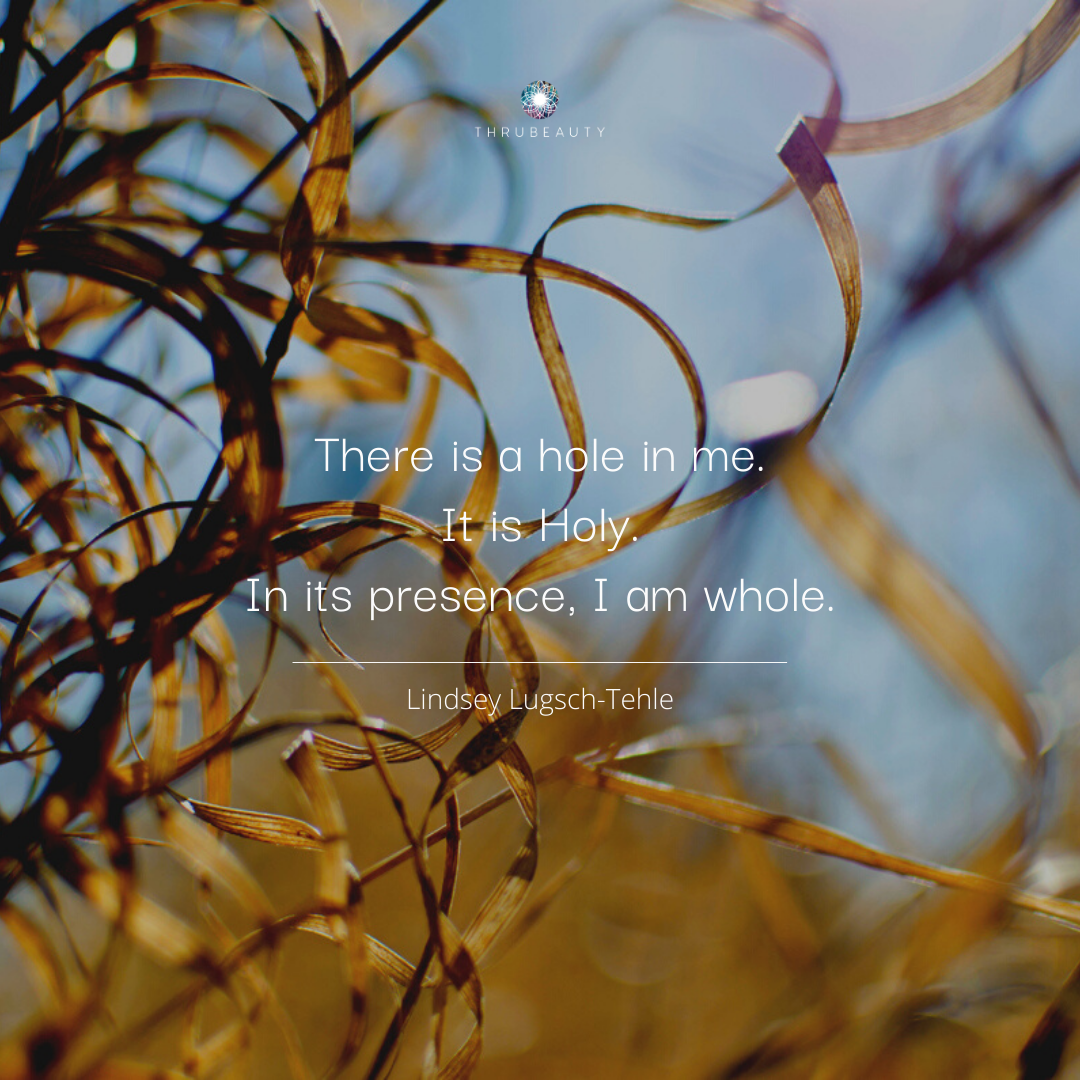
There is a hole in me.

I’ve never let myself get too close.
I’ve kept my distance—wondering, but never venturing near its shore.
Its presence is vast, leaving me feeling unknowable, even to myself.
Its presence is palpable, always reminding me that it is there.
Its ache is ancient, eternal.

There is a hole in me.
Experience tells me that this hole is hell.
It is to be avoided at all cost.
It can never be filled;
it can never be closed.

But what if?
What if my experience has been tainted by wounding,
rather than guided wisdom?

What if this hole is not hell?
What if it is Holy?
What if it is not a vast emptiness to be filled,
but a sacred space within to be visited?
A space solely for me.
A space where I can Be.
A space where I can commune with the Unknowable, the Ancient Eternal, Remembrance itself?

What then?

There is a hole in me.
Wisdom tells me it is Holy.
For within its presence, I am whole.

Comment

Perhaps We Will Learn

1 Comment

Perhaps We Will Learn

All is sacred, and our presence transforms.
The caliber of such transformation depends upon the quality of our approach.

For if we approach creation with a rushed and arrogant negligence, our presence—which is indeed not present at all—contributes to the desecration of and our severance from both the soul of the landscape and the landscape of our souls, and the connection once sought becomes a mere encounter.

If, however, we approach creation with reverent and humble remembrance, our presence—which is indeed present—elevates the sacredness of any space; for when we walk with reverence trust stirs within the heart of the wilderness and the wilderness of our hearts, and mere connection becomes communion.

And with communion, perhaps we will learn that our home loves having us here.

1 Comment

Spring has Sprung

Comment

Spring has Sprung

Spring is lauded as a season of life, rebirth, and beauty, which it is. Yet, before such beauty unfolds Spring begins a bit of a muddy mess. We forgive the mess because we know it serves a profound purpose in bringing forth the life, rebirth, and beauty our souls ache for after a long winter.

The word humus—decayed vegetation that feeds the root systems of plants—shares its origin with the word humility. Spring begins humbly as decaying plants become the means through with new life blossoms. The tiniest of buds, shoots, and sprouts begin to form in places that just a few days prior appeared lifeless; a few days later those buds, shoots, and sprouts emerge as leaves, stalks, and stems. In our own lives, experiences that “bring us low” can become the rich soil in which new and deeper understandings of our humanness can grow, exponentially.

After the perceived scarcity of Winter, Spring comes along in full bloom reminding us that the beauty of life is not to be hoarded, but to be freely and joyously given away. Were Autumn to have held on to its seeds and were Winter not restful, Spring would not brim with colors and fragrances, giving away its blossoms and fruits with wild abandon—not out of duty, but out of love. Let us remember that the Springs of our lives are gifts—not to be clung to, but to be offered up—which are made possible through the Autumns and Winters that precede them.

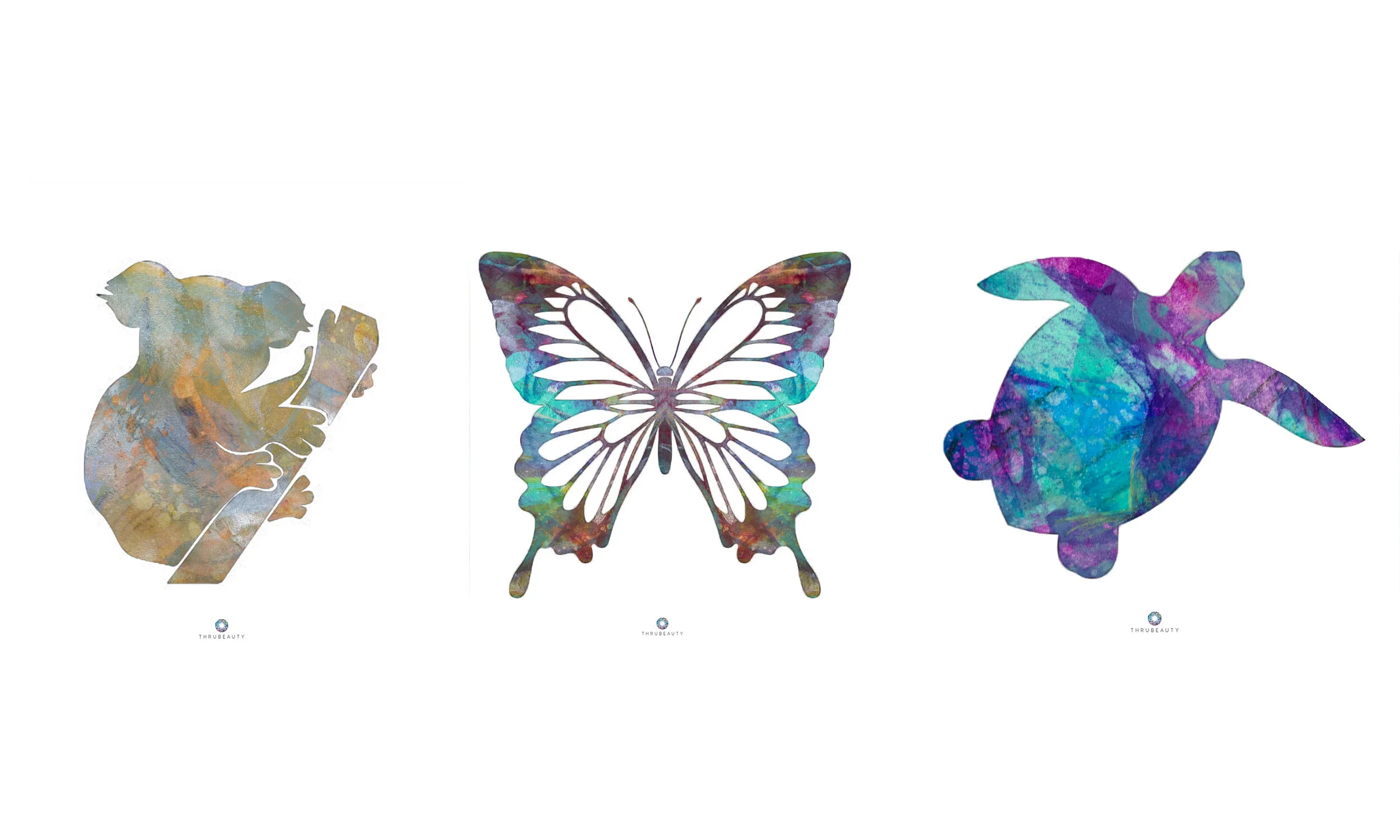
The 2020 Spring Collection was created to support us all in our remembrance of the muddy beginnings that give way to glorious flourishing.

With you in Spirit,

Signaturelogosmall.jpg
 

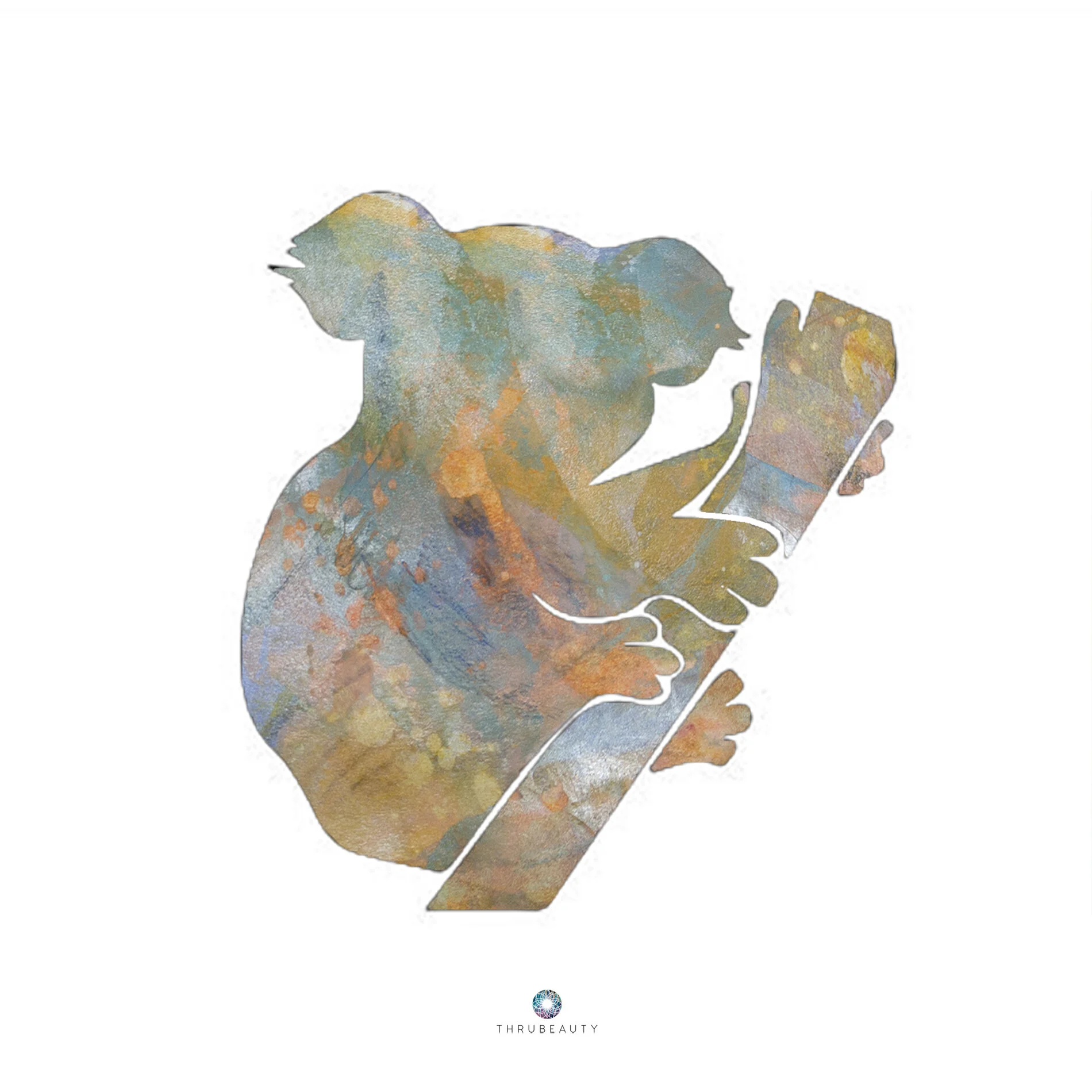
Koala

Butterfly

Sea Turtle

The koala is symbolic of pure peace and delightfulness, reminding us of the significance of slowing down and listening—to one’s self and the surroundings. The koala is the ultimate rejuvenator—partaking in activities that replenish and revive—in ord…

The koala is symbolic of pure peace and delightfulness, reminding us of the significance of slowing down and listening—to one’s self and the surroundings. The koala is the ultimate rejuvenator—partaking in activities that replenish and revive—in order to truly nurture and protect others.

Symbolically the koala represents motherhood, empathy, calmness, and trust.

The colors of muted yellow and soft blue accentuate the message of the koala to seek authentic and restorative connections in measured and meaningful ways.

Fragile in form, the butterfly teaches that will and purpose—and a bit of playfulness—can carry us forward. We are free to share our bright colors with the world from a place of joy, hope, and grace, and while the road ahead may be long, there are i…

Fragile in form, the butterfly teaches that will and purpose—and a bit of playfulness—can carry us forward. We are free to share our bright colors with the world from a place of joy, hope, and grace, and while the road ahead may be long, there are invisible currents to assist in uplifting and supporting our journey. Enjoy the process as the beauty of life’s continuous unfolding beckons to greater horizons.

Symbolically the butterfly represents acquiescence, transformation, wisdom, and prosperity.

The colors of green, blue, and purple highlight the message of the butterfly to move through life with a grace born of invisible strength, lightness, and trust in your guiding principles.

The sea turtle reminds us that every moment is a miracle, and that such miracles are ripe with possibilities—requiring a measured pace and sustained effort, as well as trust in and surrender to the larger, sweeping currents of life. As sea turtles c…

The sea turtle reminds us that every moment is a miracle, and that such miracles are ripe with possibilities—requiring a measured pace and sustained effort, as well as trust in and surrender to the larger, sweeping currents of life. As sea turtles carry with them all that they need, they reinforce the significance of treading the earth with kindness, respect, and due regard for beauty.

Symbolically the sea turtle represents longevity, sustainability, presence, and coherence.

The colors of maroon and blue highlight the message of the sea turtle to move at a pace that allows for presence—taking in all that surrounds you—that you may, at every moment, remain aligned with the larger rhythm of your life.

Comment

Heroic Communities

1 Comment

Heroic Communities

I’ve noticed that sometimes it seems that we are only genuinely interested in connecting if others have something to offer us—something to assist us in our own journey.  I notice this in myself at times, and it startles me because I tend to think I am a genuine person.  I live for meaningful connections, wherever I find them.  I honestly believe that all people have something to offer the world, some glimmering of Grace and Beauty and Love and Truth in their souls, and I’ll see it if I just take the time to recognize it.  So with this belief, why do I still find myself not actually present with some people?

After pondering on this for some time, I’ve come to the realization that this selective connection mindset has to do with our collective superhero complex.  For the past couple decades, superhero movies have been the main revenue maker at the box office; men and women, young and old all love to watch one individual save the world.  This speaks volumes to our collective consciousness.  We all have this deep desire to contribute to something meaningful.  We want to be “the one” to make everything better, to make it all okay.  And in our quest to be the savior we tend to seek out support from those we believe will help us get to where we need to go, thus we become selective in the genuine connections we make with those around us.  The trouble with this is that it is alienating to a significant portion of the people we come in contact with, let alone those with whom we never engage.  What’s more, it perpetuates a contest between basically all people who feel called to make meaningful change in the world.

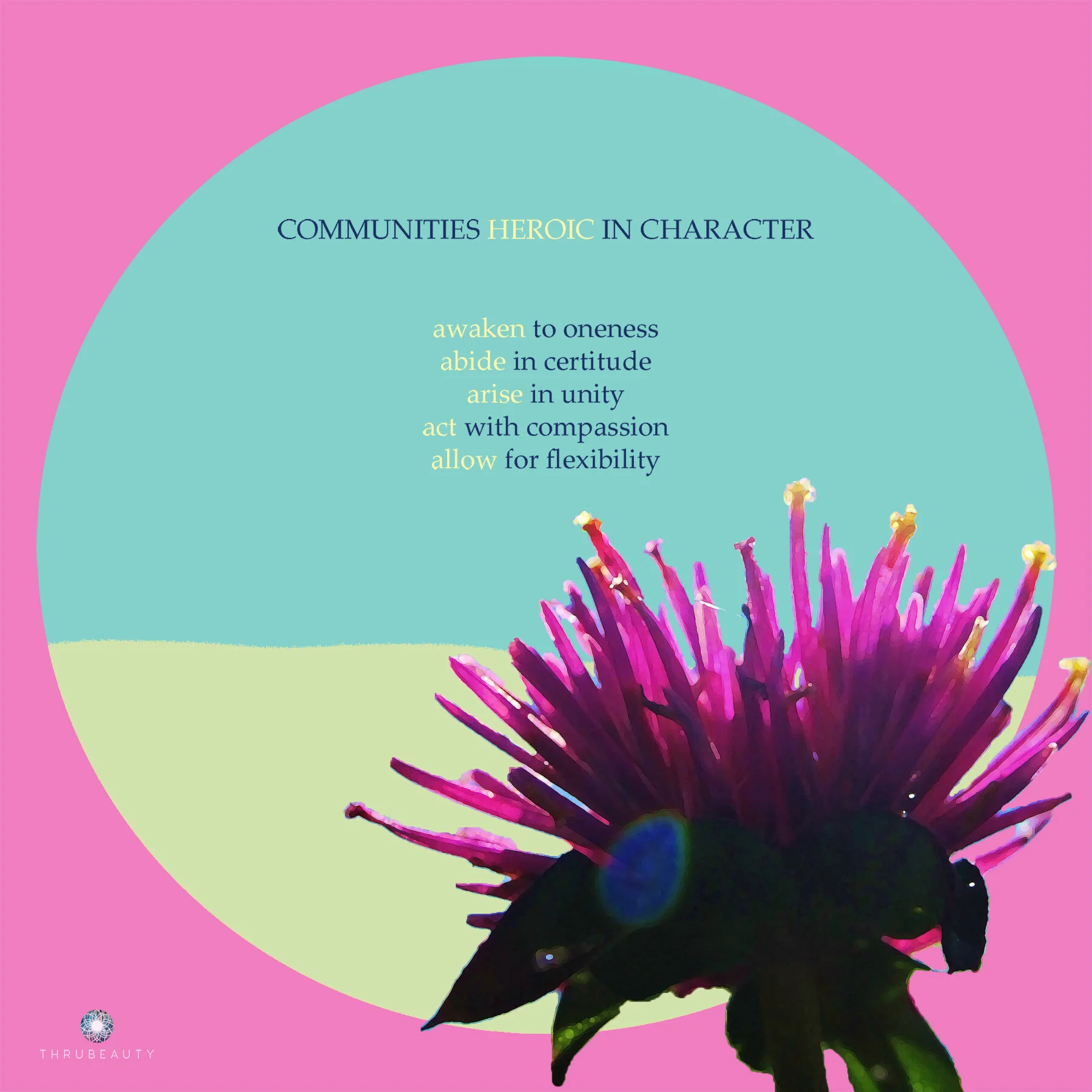
This deep desire to contribute to something meaningful is a beautiful thing; however, it has become distorted by a world that values competition over cooperation.  We no longer live in a time where superheroes can actually save us.  The challenges facing our communities and our world, at present, are so complex that it will actually take all of us to overcome them, literally, and that means that genuine connections with, and compassionate concern for, all people are an integral aspect of our collective advancement.  Yes, there is a deep, innate desire in each of us to contribute to something beautiful and worthwhile, and this is magnificent because it will take all of us to transcend the crises we face.  We live in a time that no longer requires individual heroes; what the world needs now are communities heroic in character.  We need communities that manifest Grace, Beauty, Love, and Truth.  We need communities in which all members contribute their voices in generous and compassionate ways so that justice and equality become realities for each and all alike, not just for a select few, and not by a select few who think they know what is best for everyone.  Everyone must be a part of the conversation, and not everyone will feel welcome to join the conversation until our connections are genuine and sincere. 

So, what does this mean for our work in the world?  All of us are on a path that, in some part, is driven by this collective superhero complex, but that doesn’t have to be the case any longer.  Even just switching our mindset from that of being a savior to being a contributor to something greater than ourselves will have dramatic effects on our work in the world—this does not mean that we have to change anything we are “doing” necessarily, rather it is an internal adjustment in how we are “being” in the world.  Such a shift in mindset and demeanor will assist us in recognizing how our contributions fit in the larger picture; what’s more, such a shift will assist us in recognizing how the contributions of other fit as well.  You see, once we recognize that both our individual development and the development of our communities are inextricably linked together through our service in the world, we will come to appreciate how a community is supported by each and every individual and, in turn, our capacity to be genuinely interested in each and every person will become a natural and effortless new habit, a habit that weaves a new pattern of life for us all.

So with all we are collectively facing today, let us strive, not to save the world as individuals with a glorious destiny, but as individuals who are a part of something bigger than ourselves—part of a collective destiny, part of heroic communities.

With love,

Signaturelogosmall.jpg
 
heroic.jpg

1 Comment

Come

2 Comments

Come

Today is the nine-year anniversary of the day I met my husband. I have been feeling all nostalgic, so I went to my old blog and re-read what I wrote about meeting and marrying him. While doing so, I came across this poem I composed before we met, and it reminded me, just a little, of who I am. I hope it will do the same for you.

Come

Do you know who you are?
When you look in the mirror do you see what I see?

You are a radiant light, a brilliant star, a flourishing, vibrant, and fruitful tree.
You are an angel
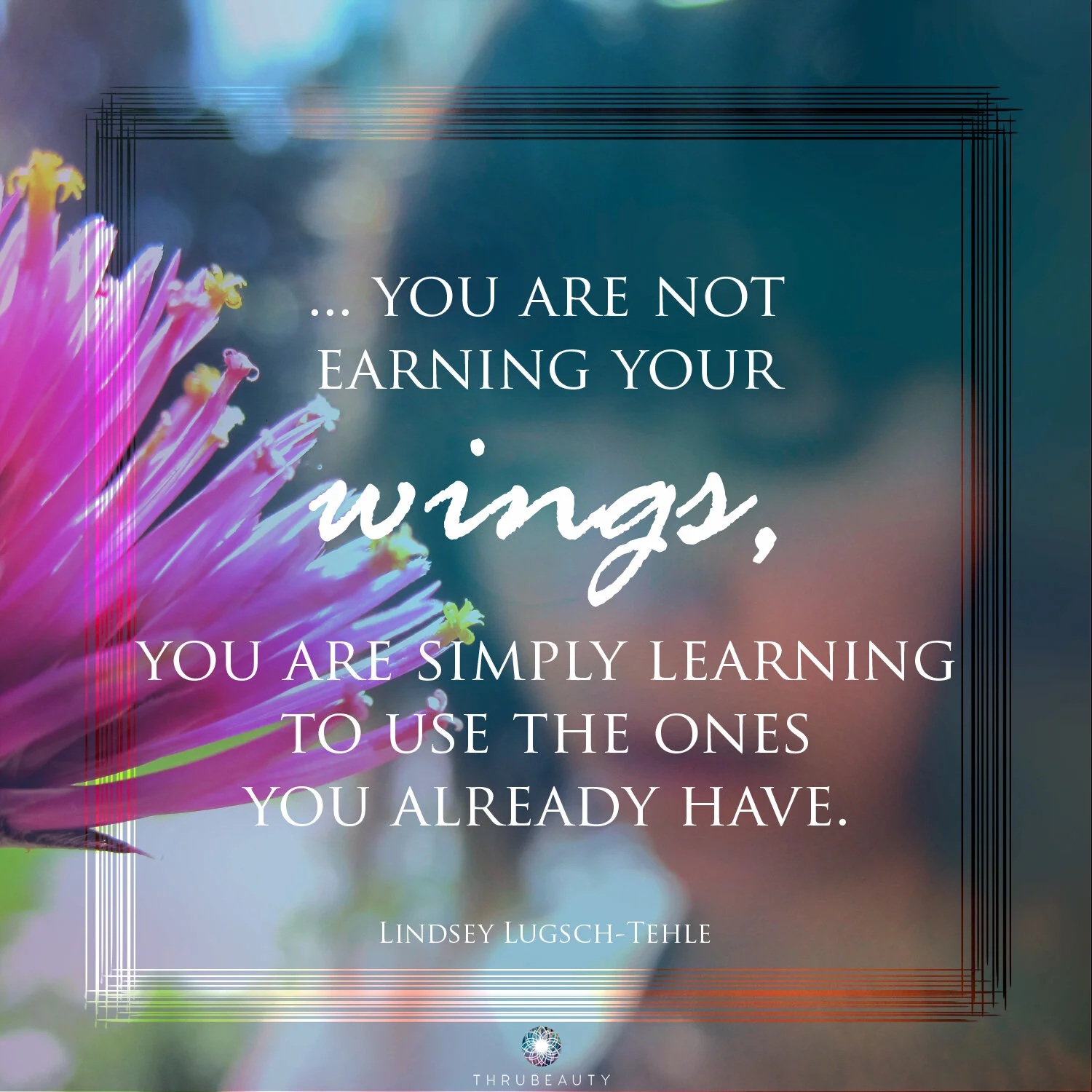
and you are not earning your wings,
you are simply learning to use the ones you already have.
You are a gift to the world.
You are a gem that sparkles and dances, lit from within.
You are noble....
remember you are noble.
You are love.
You are beauty.
You are truth.
I see this in you.
It does not come from the things you've done,
or the things you haven't done.
It does not arrive when it is recognized.
No, you are innately timeless in your glory.
You are born into and out of beauty.
You were created as a single wave on an endless ocean,
to dance and laugh and express, all the days of your life.
So come dance, laugh, and express,
it is what your heart has been longing for.

With love,
Lindsey
written 10 February 2010

2 Comments

Oh! Trees.

Comment

Oh! Trees.

Meeting the Sequoia for the first time

Meeting the Sequoia for the first time

For the last year I’ve been working on creating a line of spirit-centered apparel based on the hidden messages of the natural world. Native traditions have long held that the natural world is ripe with guidance. My own belief system, the Bahá’í Faith, tells us:

“Nature in its essence is the embodiment of My Name, the Maker, the Creator. Its manifestations are diversified by varying causes, and in this diversity there are signs for men of discernment. Nature is God’s Will and is its expression in and through the contingent world.”

With this as the bedrock of my new line I turn to the trees as my guidepost. Many moons ago I stood in the shadow of the majestic Sequoia of Northern California and felt as though I was walking with giant emissaries—messengers with a secret mission to remind us all of our humility and nobility. This past summer I was blessed to return to Northern California to walk with the mighty Redwoods. Of the lessons I’ve learned from trees, none is more timely than our dependence on them. Trees act as air purifiers and creators; they remove carbon dioxide from the air, store it, and, in turn, produce oxygen. They also act as “straws” drawing moisture from the soil and replenishing it in the atmosphere, thus ensuring an equitable distribution of moisture.

Standing in awe of the Redwoods

Standing in awe of the Redwoods

In addition to the physical health of our planet, trees also provide silent wisdom—reminding us of the significance of seasons as we move gracefully through our own lives; modeling how truly letting go requires acquiescence, not effort; calling us to remember that under the surface we are all connected in a myriad of ways, growing as one organism; standing as examples of the truth that if we are patient and discerning, the troubles we face shall pass; and illuminating that every action—even and especially those that go unnoticed—is imbued with meaning that ripples through generations, into the future. 

It is from this place of awe and reflection that I’ve decided to donate a portion of the sales of my new line to the International Tree Foundation.

This international conservation organization was started by a man of great vision and insight, Richard St. Barbe Baker. His organization has worked to carry out “sustainable community forestry projects which protect, regenerate and cultivate trees and forests to conserve habitats rich in biodiversity and to enhance human and environmental well-being.” 

My aim is to follow suit and put forth artwork and apparel that supports the cultivation of a spirit-centered community, a community with both the intention and the volition needed to transcend divisive thinking so that we may find common ground, literally, upon which to stand and face the future with full hearts—hearts capable of seeing and valuing the beauty within and surrounding us.

With a full heart,

Signaturelogo.jpg
 

Comment

Be Your Beauty

3 Comments

Be Your Beauty

I learned long ago that thought is reality, and the way that I saw myself became the way I carried myself.   For many years I let my self-image dictate how I showed-up in life, and it wasn't pretty.  I was awkward, always seeking to be invisible—letting my hair hang in my face, never making eye contact, wearing baggy clothes, and never speaking up.  I didn't value mySelf. 

At the encouragement of my parents and a friend's mother, I attended modeling school and started to see my beauty.   I started modeling and while this began to change things for me, seeing myself as physically beautiful was not the same as seeing myself as innately noble.  I had to do the inner work necessary to accept the nobility of my soul as an absolute, unchangable fact.  As I walked this path of "knowing" to my core my inherent worth something striking happened in my photoshoots, I began to show-up differently in the images.  Images that once looked pretty but hollow became vibrant and full of life.  I realized that in order for an image to truly capture a person's light, that light has to be lit from within—this isn't something photoshop can "fix". 

Now I work behind the camera lens, supporting others in their journey of embracing their inner light so that their brand images truly reflect their inner certitude.  I do this through my Brand Your Beauty program.  This program supports entrepreneurs in stepping into their light on camera leading to an increase in both confidence and clients.  During our time together we  explore the various barriers—myths, fears, and insecurities—that keep individuals from honestly recognizing their inherent beauty and transform such barriers into bridges to their true calling.  For you are a noble soul.  Once you embrace this truth and show-up in life knowing to your core that you are a vibrant, brilliant, beautiful being, the world cannot help but notice.  And when you feel confident, it is a catalyst to your calling, and THAT is what this work is about—empowering you to serve.

An essential aspect of the Brand Your Beauty program is the virtual Radiance Retreat, which consists of three mini-intensives: Exploration, Transformation, and Sophistication conversations.  During the Sophistication conversation I share tips and tricks from nearly two decades of experience in-front of and behind the camera lens.  Much of this learning comes from my time as a model—both in terms of techniques to amplify physical beauty and, most importantly, to boost inner radiance.  However, most of this learning comes from my own journey to truly see myself, my whole Self, as beautiful.

So while much of this may sound like it is only for entrepreneurs or those preparing for a photoshoot or live event, the truth is that all of us could stand to recognize, appreciate, and embrace our genuine and natural beauty in a way that elevates our souls, awakens our purpose, and catalyzes our calling.

For a glimpse at the kinds of things covered during the Sophistication conversation, click here for a free gift, "Be Your Beauty".

So much love,

3 Comments

Grasp the Paintbrush

Comment

Grasp the Paintbrush

Lately prayer has been on my mind, as I share my perspective please consider sharing your own in the comments below.

Prayer is focusing all of your intentions, hopes, desires, gratitudes, and longings on the Omnipresent.  Prayer is spirit calling out through your very pores for harmony, patience, peace.  Prayer is offering harmony, patience, and peace.  Prayer is watching a newborn babe, in all his or her glory, sleep.  Prayer is riding a bicycle for the first time, the fiftieth time, the last time.  Prayer is photographing a moment of beauty that would otherwise go unnoticed.  Prayer is singing a song at the top of your lungs, or under your breath, just because it makes you happy.  Prayer is smiling at a stranger, your mother, yourself.  Prayer is uncovering the infinite depths of your nobility.  Prayer is climbing a tree, climbing a mountain, jumping off a cliff, and standing in a prairie.  Prayer is breathing.  Prayer is life.  Prayer is living your life in a state of humble gratitude and awe.  Prayer is living your life with love and compassion.  Prayer is upholding justice.  Prayer is being.

Every thought we think is a prayer.  Every word we utter is a prayer.  Every action we take is a prayer.  Whether we know it our not, the Unknowable Essence is ALWAYS present.  It’s really on us to recognize that our thoughts, words, deeds, and energy are perpetually in motion, headed Home.  If acknowledged, maybe we’d pray a little differently.  Maybe we’d live a little differently.  Maybe we’d live our lives with greater authenticity―for the more authentic we are, the more potent our prayer.

An authentic life is the most personal form of worship. Everyday life has become my prayer.
Sarah Ban Breathnach

Authentic living is equivalent to potent prayers.  Why?  How?  Prayer is a deeply personal expression of truth.  In the privacy of your own internal sacred space prayer is an unveiling of your innermost secrets, desires, wishes, dreams, gratitudes, and longings to yourself, as well as to your Creator.  Therefore, Truthfulness = Authenticity.  The more earnestly and honestly we share with our Healer, the more clearly we will see and understand ourselves.   This internal honesty is crucial to our growth.  For as we walk up our own personal mountain path, we will never be able to forge ahead if we do not acknowledge the boulder blocking the way.  Once we are honest with ourselves and our Maker about our boulders we will have perspective, tools, and capacity to move beyond them.

Truthfulness is the foundation of all human virtues. Without truthfulness, progress and success in all the worlds of God, are impossible for any soul. When this holy attribute is established in man, all the divine qualities will also become acquired.
― ‘Abdu’l-Bahá

Additionally, once we express to our Guide where we are at―once we acknowledge what state we exist in at the present moment―we offer up our load, unburden our souls, and allow ourselves to be clear channels.  This experience is remarkably transformative.  Yet most people close their prayer thinking the prayer has ended…yet the Divine is ever present; we continue to offer energy that will always be received.

However, if we continue to remain open, humble, and honest, live with authenticity, and exude an attitude of gratitude, our conscious intention allows us to embrace that all of life is a prayer. On a moment to moment basis we are interacting with each other, living our own prayer and respecting each others prayer.  With this level of authentic awareness our lives are lived as potent prayers, focused and directed at honoring the Divine in all we see, do, speak, think, feel and experience.

Action is the normal completion of the act of will which begins as prayer. That action is not always external, but it is always some kind of effective energy.
Dean Inge

As more and more people come to live their lives as a prayer, more and more people will arise, transformed into healers.  We will recognize that a smile has the capacity to heal a broken heart.  We will recognize that a kind word, an open heart, an attentive ear, mends and transforms sorrow into joy.  We will understand that every action, even the actions that go unnoticed, are a part of the prayer that is life.

Prayer is not…idle amusement. Properly understood and applied, it is the most potent instrument of action.
Mahatma Gandhi

For as we live authentic lives, allowing our souls to be open to the promptings of the spirit, pursuing our calling, and ever mindful of what is God’s, we begin to see the art of prayer in creating a new and beautiful reality.  So come pray with me…won’t you?

The man who makes a piece of notepaper to the best of his ability, conscientiously, concentrating all his forces on perfecting it, is giving praise to God. Briefly, all effort and exertion put forth by man from the fullness of his heart is worship, if it is prompted by the highest motives and the will to do service to humanity.
― ‘Abdu’l-Bahá

graspthepaintbrush.jpg

Comment

The Story that Starts and Ends with a Turtle

Comment

The Story that Starts and Ends with a Turtle

A couple weeks ago I saved a turtle.  My husband and I were driving in Henry County along a winding road to New Castle, KY, and we saw a turtle in the road.  After I shouted “that was a turtle!” Adam asked if we should turn around.  Of course I said yes, and so we did.  It wasn’t the safest idea I’ve ever had, but I did it.  I ran into the middle of the road and picked the little guy up by his shell, and, while he hissed at me, I placed him safely in the grass on the other side of the road.  As we drove away a huge tractor drove by which would have totally crushed the poor guy, and I said out loud that I felt saving that turtle was one of the most significant acts of gratitude in my life, no joke.

In May of 2011 Adam and I went on a nine-day pilgrimage to the Bahá'í World Centre in Haifa, Israel.  On the final day of our pilgrimage, at our final Holy Place visit—at the House of the Master—I stepped outside to take a moment for myself and I saw a turtle, right smack dab in the center of the sidewalk.  He was looking right at me, as if to say “I have something to tell you”.  In that moment I was overwhelmed by a knowing that Adam and I would be taken care of, and not in a general sort of way, in a very specific way—our housing would be provided for us for a good long while.  So this turtle, who carries his house wherever he goes, was showing me that our housing would be taken care of so that we could focus on other, more important things in the early years of our marriage. 

I was a student, and after we were married in January of 2011 I transferred to the college Adam worked at in Saint Peter, MN.  Shortly after returning from pilgrimage, my husband was offered a secondary position at the college as a head resident at one of the campus dorms.  So in the summer of 2011, we moved into an apartment on campus—our accommodations provided for—for two years.    

As I approached graduation we began to look at other opportunities, one of which was service in the Holy Land, at the Bahá'í World Centre—where we had visited for pilgrimage.  Prior to my graduation we were invited to serve for 30 months.  Moving to a new country is an exciting and challenging experience, and it was seamless in part because our accommodations were provided for us while overseas. 

As our time in the Holy Land drew to a close, and we began to think about next steps, we decide to return to the US and be near family.  We didn’t want to just jump back into life as we knew it, for we had been changed by our experience overseas, and we wanted to be mindful about what we did next.  We were very fortunate in that we were able to live with Adam’s parents for 17 months while we adjusted to life back in the US.  As our time with them drew to a close we were offered a service position in Louisville, KY, which provided accommodations.

For the last six years our accommodations have been provided for us, and every time we moved I thought about that turtle and was grateful.

Last month our service ended in Louisville, and while we were offered another opportunity that would have provided us with accommodations, we decided it was time to change the course of our lives.  My husband accepted a position teaching High School English in Henry County, KY, and on our way to the high school to see his classroom we saw a turtle.  Yep, the turtle at the start of this story.  And while I was carrying him over to the side of the road I felt something shift.  It felt so significant, saving that turtle.  It was almost like saving him was my way of expressing gratitude to that other turtle for its message all those years ago.  It was more than that; it was my way of thanking God for sending me messages in ways that I understand, for truly providing for Adam and me while we began the work of building a solid foundation for our marriage, and for letting me know that while it is a bit scary to have all the bills that come with having your own place, we made the right choice, and we will be provided for in other ways.

So here I sit, in our new apartment reflecting on the gratitude I feel for the years of support that we have received, in awe of the mystical workings of the Divine, leaning into this new chapter in our lives, and humbled by the message of not one, but two turtles.

In awe of God's will,

Sunset from Henry County High School

Sunset from Henry County High School

Comment

The Tattoo

Comment

The Tattoo

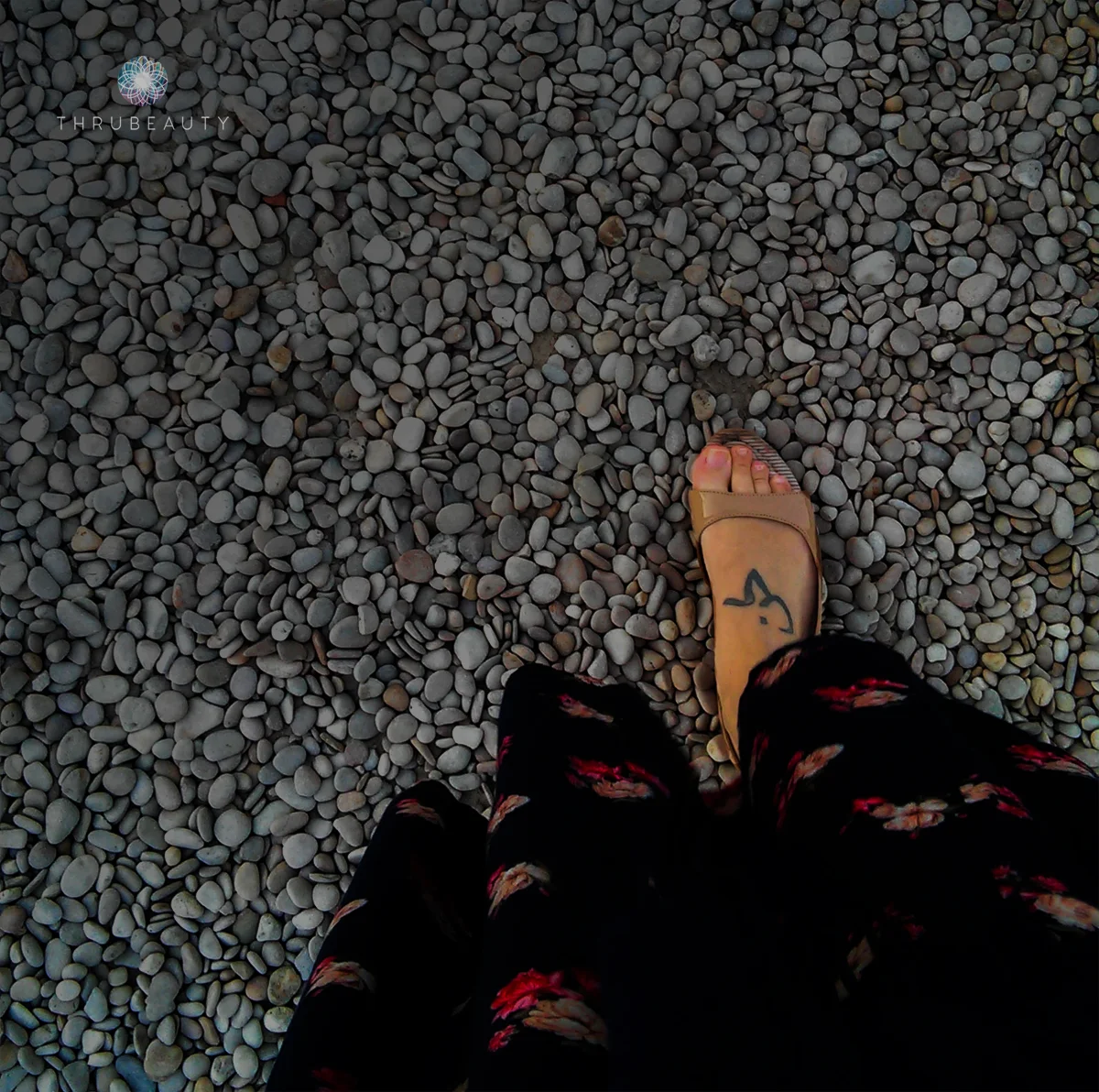
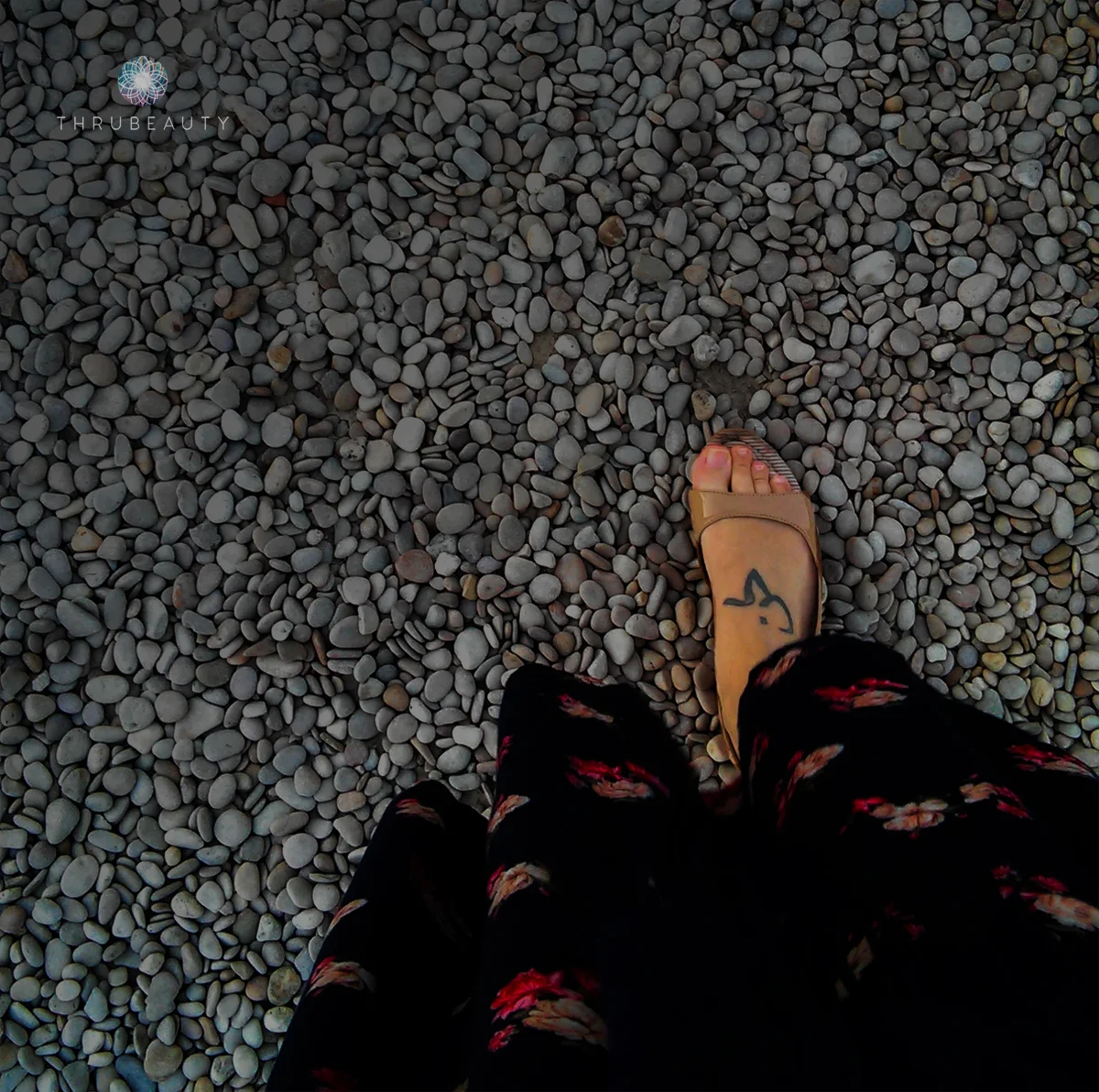
This, here, is my right foot.

The one-and-only tattoo I have is on this foot. Before getting this tattoo, I used a sharpie marker and drew it on every day for a month, just to make sure I wanted it. And boy, did I want this one. And even now, after 10 years, it means more to me every day than it did the last.

This word “kon” in Arabic means “be”. At the time I had been reading all about certain experiments in Japan that indicated that the energy of a word could visibly transform the molecular structure of water, so I decided to get a word tattooed on my body to support my overall growth and development (I mean, our body is overall 60% water and our brain and heart are 73% water!). I kept thinking of words, and at the time I was really focused on understanding and upholding justice in my life, so initially I was going to get that on my foot.  But then I thought, "is this really the attribute I'm going to want to work on in 10 years?" Well, it's 10 years later and I'm glad I went a different direction.

Ultimately I decided on “be”, thinking I could mentally insert whatever attribute I was focused on at any given moment: “be just” or “be joyful”. Only after I got the tattoo did I learn that in Persian the same word “kon” means “do”. I thought this was pretty darn cool back then, but today it is my favorite thing about my tattoo.

This one word, in two languages, means both “be” and “do”. This is what I am striving to live into at this moment in my life, being myself through doing the things that remind me of who I am. 

The whole being and doing thing is so fascinating to me. This symbiotic relationship is called our “two-fold moral purpose”, and essentially it states that the individual and society develop together. I, as an individual, cannot develop my character and capacity without being of service to my community. AND the community cannot develop its character and capacity unless individuals are being of service to it and supported by it. So if I want to “be” my best self I have to “do” what I can for my community.

It's truly incredible if you think about it. The lessons I keep learning from this one little tattoo. 

With love,

Comment

Forever reaching

1 Comment

Forever reaching

For as long as I can remember, I've been reaching for something higher, something more.  I'm not talking in the materialistic sense; I don't feel the need for higher status nor do I aspire to accumulate more things.  No, what I am reaching for is of the spirit.  I believe we are all inherently noble—born of Beauty and created in Love.  Because of this, I believe that each soul has a priceless opportunity in this life to bring to light all the latent gems inherent within.  My work is really about supporting you in bringing the gems latent within you to light, so that you are able to bring your true Self, and all of the attributes of your soul, into the world. 

Realistically, if I am not also doing my work to mine those gems latent within my own soul, I will fall short in my calling to support you.  AND if I am not supporting you to be your best Self, I will struggle in being my best Self.  This is because, as humans, we have a two-fold moral purpose.

We live in a world that seems to contradict itself.  On one hand, we are told to look out for number 1 at the expense of everything/everyone else.  On the other hand, we are told to sacrifice everything/ourselves for the betterment of others.  Well, if we remove the extremes from these two idea we find a middle path, a path that says it is necessary to support our community and ourselves.  What's more, the two-fold moral purpose says that rather than being dichotomous, the development of ourselves and the world is a dialectic—individual and communal growth happen in relation to one another—and the vehicle for such development is service.

If this is true, and I believe it is, than my community will be strengthened through my contributions and, in turn, the gems of my character will shine forth.  So you see, I will forever reach to be the best I can be, not because I want to be better than others but because the dark soil of this world has the capacity to bring forth the most fragrant and beautiful rose garden.  Through my efforts, our efforts, to be of service in the ways we feel called we will see this transformation take place, one gem at a time.

Ever reaching,

P.S. Visit Brand Your Beauty to learn more about how I can support you in shining your light.

P.P.S. Speaking of being of service to others, I'm in the process of developing a new program—a training program for fellow photographers who desire to truly bring out the best within their clients.  I realized recently that all of the work that I do is not "my" work.  It may be that I devised the Thru Beauty Method, but it isn't mine exclusively.  Therefore, I am going on retreat next week to fully develop a training protocol so that more and more people can experience the restorative power of healing Thru Beauty.  I believe this world will only transform into the rose garden it is capable of becoming as more and more people truly recognize their own inherent worth, and that is what my work is about—supporting as many people in stewarding their beauty as possible.  Therefore, the next logical step is to share this method with others.  Stay tuned, more to come on this after the retreat!

1 Comment

Awaken and Surrender

2 Comments

Awaken and Surrender

In the experience of beauty we awaken and surrender in the same act. ~John O'Donohue

What a remarkable concept.  Experiencing beauty leads to both an awakening to all that is potentially possible in this moment and to a surrendering to the larger, sweeping rhythm of life. 

In the last post I explored how beauty calls us, not to some distant future goal, but "to our inherent capacity in this moment, right now".

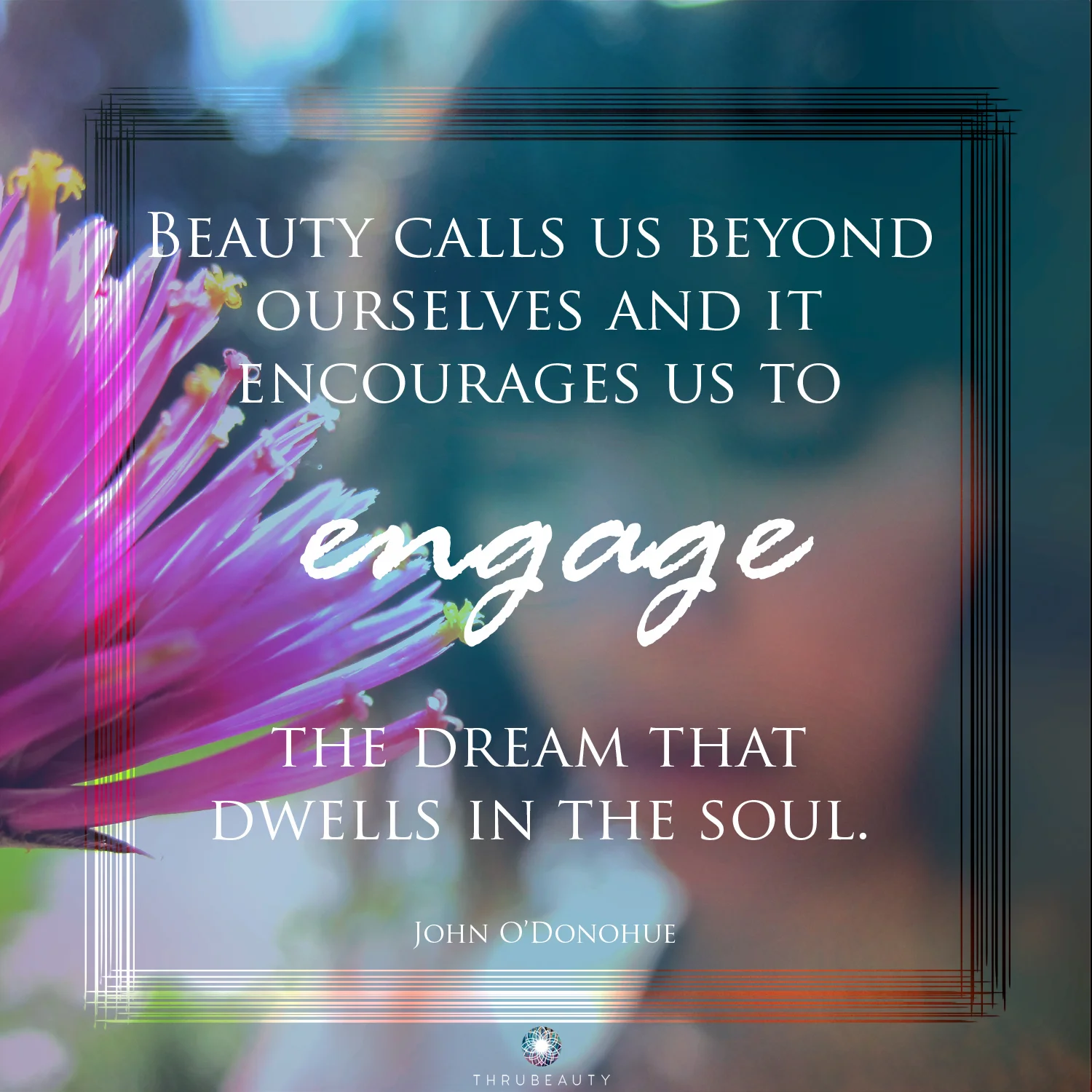
Beauty calls us beyond ourselves and it encourages us to engage the dream that dwells in the soul. ~John O'Donohue

In this sense beauty awakens our own calling and invites it out into the world.  It beckons.  It draws our attention to all that is noble within, here and now.  There is no rush to become, no urge to fix, no hustle to do more.  There is a gentle coming alive, a humble waking up to the truth of what has been inside of us all along, and in that awakening there is a surrendering, a recognition that while we are noble and grand and matchless in our capacity, we are but a drop in this one great ocean of humanity.  Beauty reminds us that if we relax into the present moment we will remain connected to the sacredness of all life.  We surrender when we appreciate that there is no place for competition in our quest to live into all that we potentially possess, for we recognize that what we truly seek is a meaningful life—a life lived in service—a life braided with luminous moments.

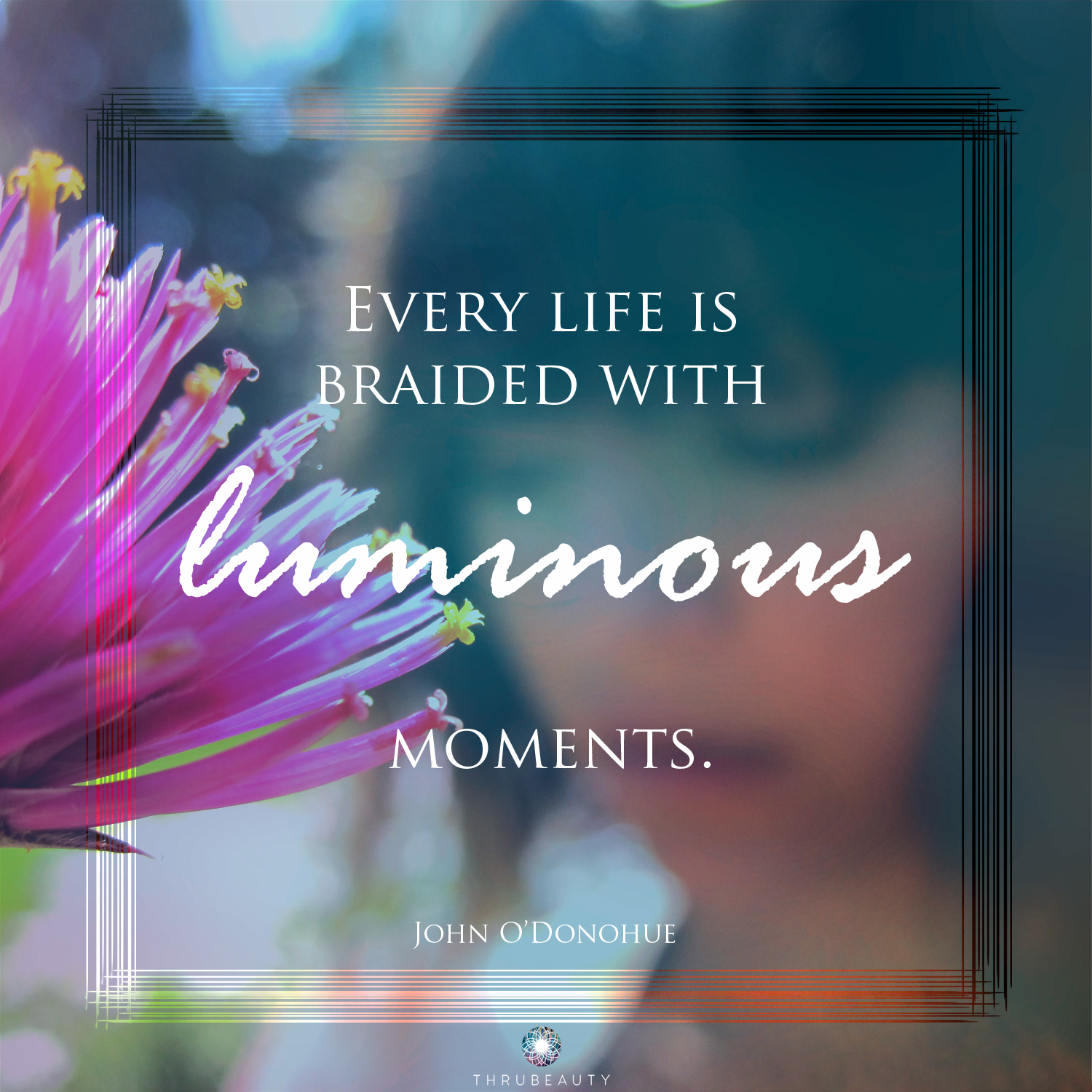
"Every life is braided with luminous moments." ~John O'Donohue

May your life be braided with luminous moments of beauty that lead to your awakening and surrendering, all in the same act.

Much love,


2 Comments

... we feel called

3 Comments

... we feel called

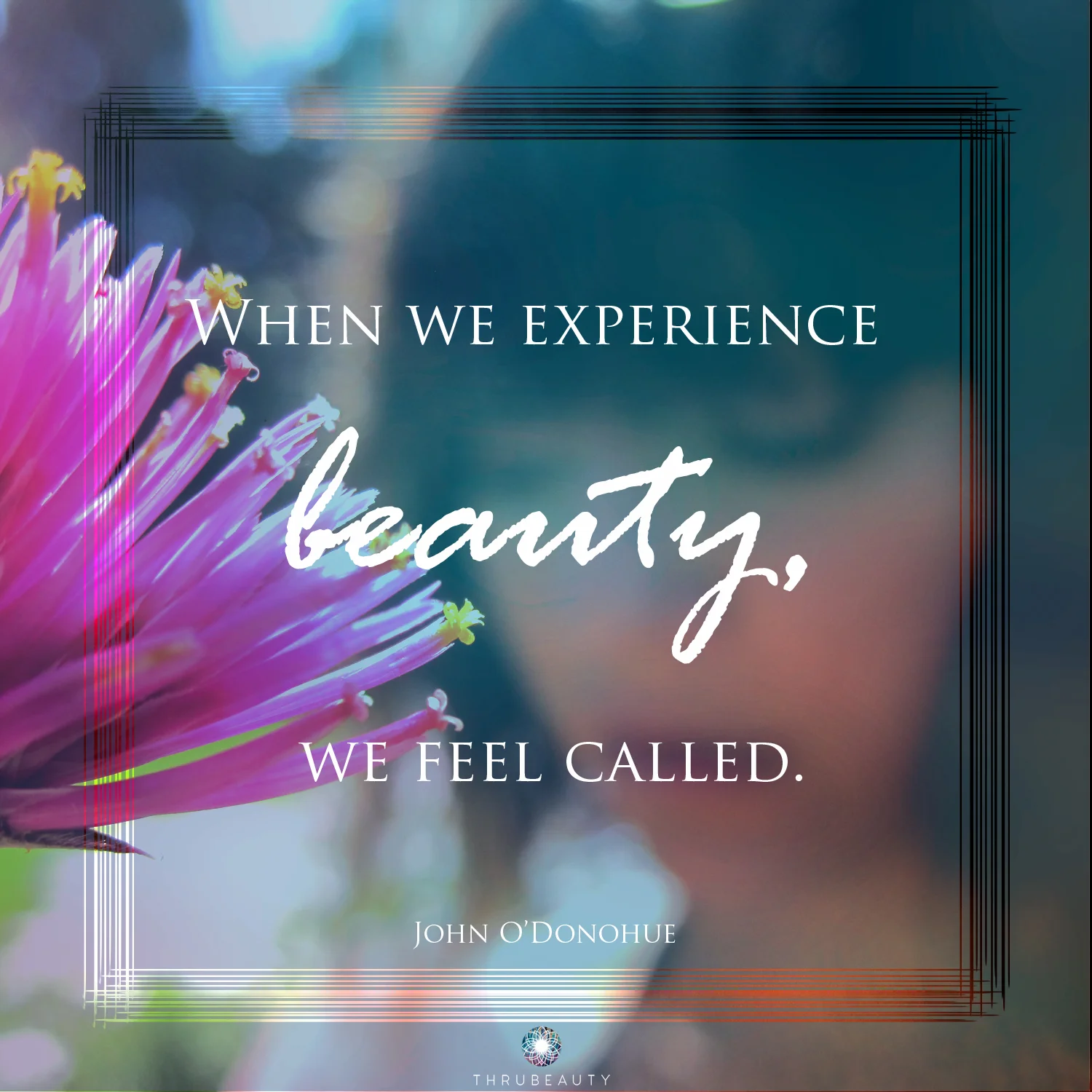
When we experience beauty, we feel called. ~John O'Donohue

I can remember being 12 years old on a crisp fall afternoon, sitting on my branch in the woods on the farm where I grew up.  I sat there completely still, transfixed by the way the light flooded through the falling leaves, casting its rays upon the ground.  All around me birds sang sweet melodies beckoning me into the moment.  I couldn't help but be exactly where I was, which was why I was there—I have always longed to be here, present. 

Much of what I've read about "calling" is that it is that "thing" we were created to do, to carry out, and that it is something we pursue, something way out ahead of us that we go after.  Much literature explores calling as being rooted in our uniqueness, inherent in who we are; yet, it is still something to move toward, as though it is forever out of reach.

What if a calling is not this elusive, distant dream or aspiration of our soul.  What if a calling is actually a prompting of the soul to awaken to our inherent capacity in this moment, right now.  I believe we are always growing and changing and transforming and becoming, that is what life is all about—striving to become the best versions of ourselves; little by little, day by day.  However, if we are overtly and solely focused on who we could be, we tend to neglect to be who we are, right now—and who we are right now is magnificent.  Sometimes we just need to be reminded of our own nobility.

That 12 year old version of myself knew this, which is why anytime I was feeling unloved/unlovable, not enough, or just plain down, I would go sit on my branch in the woods at my parents farm and immerse myself in beauty.  For when we experience true beauty we feel called—not to something out there far away from us, but to the present moment, to all that is worthy and good within us, to the glory and grace of God in our lives.

May we all seek the beauty that beckons us home.

With love,

3 Comments

And so it begins

1 Comment

And so it begins

Whew!  Starting a business is a whirlwind!  I've had to face fears and insecurities of my own through this process, and also recognize the ways in which I feel called to serve on a much deeper level.  And with this post, it begins ... so let's dive in!

Recently I was reading Daring Greatly by Brené Brown, learning about the research on shame and vulnerability and their relationship to joy and gratitude, and I found myself thinking of a few quotes from the Bahá'í Writings:

"In this day, to thank God for His bounties consisteth in possessing a radiant heart, and a soul open to the promptings of the spirit. This is the essence of thanksgiving." ~'Abdu'l-Bahá

"O My servants! Be as resigned and submissive as the earth, that from the soil of your being there may blossom the fragrant, the holy and multicolored hyacinths of My knowledge." ~Bahá'u'lláh

"Instead of complaining, they rendered thanks unto God, and amidst the darkness of their anguish they revealed naught but radiant acquiescence to His will." ~Bahá'u'lláh

After reading and calling to mind these quotes I sat back to reflect, and I looked out of the window of the plane I was in.  (I happened to be flying from California to Colorado after a whirlwind trip to work with two clients and present my Master's research on interfaith dialogue at a conference on immigration.)  So in that moment, I was directly above the Grand Canyon—like, crystal clear skies, perfect fall day, Grand Canyon.  Now, I've never seen the Grand Canyon before, never on a flight or in person, and in that moment I was breathless, choked up even.  It was stunning.  Here was this physical manifestation of beauty that comes from being "resigned and submissive", the water carved through this land creating vast cracks in an otherwise flat(ish) vista, and in its submissiveness it's beauty was born.  As an artist you'd think I would have whipped out my camera and taken a few shots out of the window.  In that moment, my prerogative wasn't to act as photographer, it was to simply allow myself to be taken on the journey the landscape beckoned me toward.  To quote one of my favorite movies (The Secret Life of Walter Mitty, 2013), "If I like a moment, for me, personally, I don't like to have the distraction of the camera. I just want to stay in it", for "Beautiful things don't ask for attention."

If only I can continually recall that moment, how being "open to the promptings of the spirit" is much like the water flowing through the channel created out of "radiant acquiescence"—oh the joy felt in gratitude, the power cultivated in submission!  I was reminded of why I am doing the work I am doing, it is that feeling of returning home within one's self, the kind of homecoming that is only possible thru an encounter with true beauty.

So that is what I am here to support you in, returning home, to your center, thru beauty.  Whether through a specific program—Brand Your Beauty and Shape Your Sanctuary—or through customized artwork and prints—Radiant Creation and the Shop—it all centers around supporting you to come home within yourself through an encounter with beauty—the beauty within and surrounding you.

Ever in service,

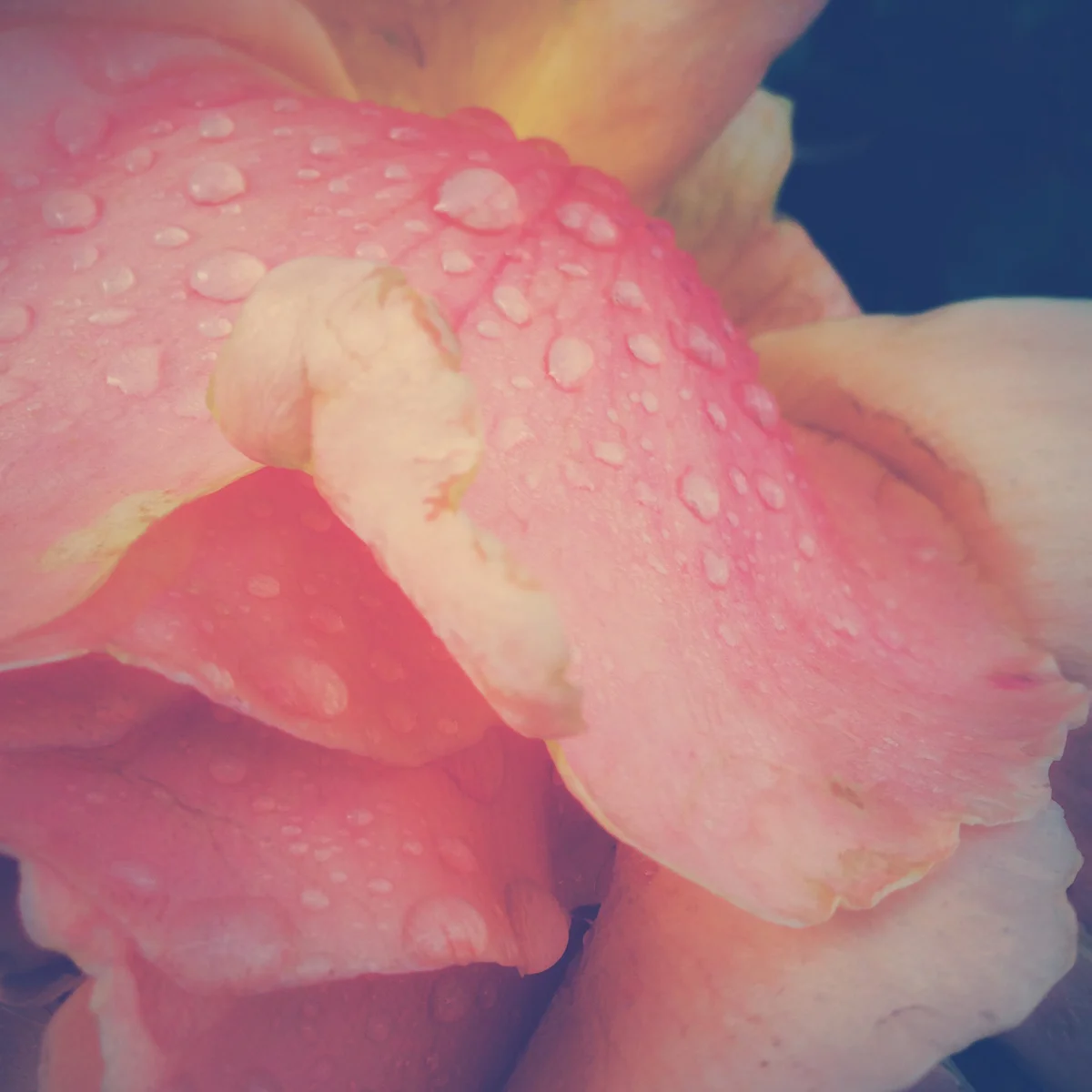
Since I didn't take a photo of the Grand Canyon, here is a photo of a rose in the morning dew.

Since I didn't take a photo of the Grand Canyon, here is a photo of a rose in the morning dew.

1 Comment